Minerals: biochemical roles, nutritional needs and health impact
Table of Contents
General introduction
Minerals are essential inorganic micronutrients that act as structural components, enzyme cofactors and electrolyte regulators. Their balance depends on intake, absorption and losses.
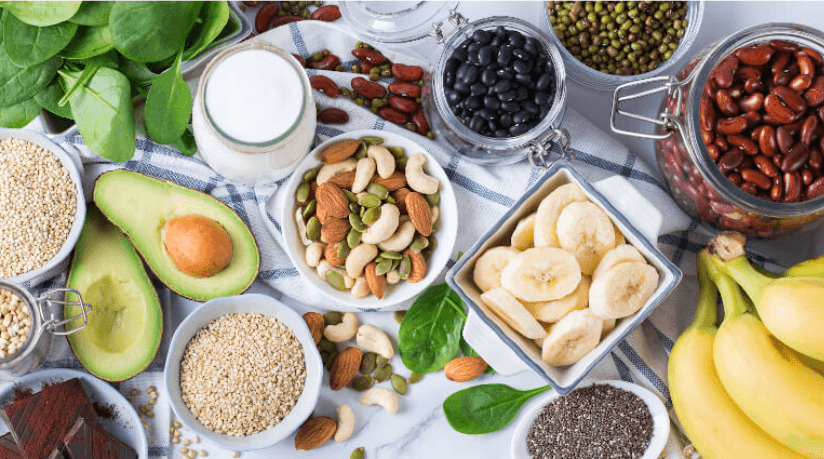
Macrominerals
- Macrominerals are required in larger amounts and include calcium, magnesium, potassium and sodium.
- They perform vital structural, metabolic and electrolyte roles.
Calcium (Ca)
Essential for bone structure, muscle contraction, nerve transmission and blood clotting. Sources: dairy, small fish with bones, green vegetables, mineral waters. Adult needs: ~1000 mg/day; deficiency → osteopenia/osteoporosis.
Magnesium (Mg)
- Cofactor for over 300 enzymes, involved in glucose metabolism, neuromuscular function and stress regulation
- Sources: whole grains, legumes, nuts, dark chocolate
- Needs: women ~320 mg/day, men ~420 mg/day
Potassium (K)
Plays a role in acid‑base balance, nerve transmission and blood pressure regulation. Sources: fruits and vegetables, legumes, potatoes. Needs ≈ 3500 mg/day; a favorable potassium/sodium ratio is important.
Sodium (Na)
- Involved in blood volume and nerve conduction
- Main source: table salt and processed foods
- Recommendation < 2000 mg/day
- excess linked to hypertension and cardiovascular risk
Trace elements
Trace elements, required in small amounts, play key roles in immunity, metabolism and enzymatic functions. Notable examples: iron, zinc, iodine, selenium, copper, manganese, chromium, fluoride.
Iron (Fe)
- Forms: heme iron (animal) and non‑heme iron (plant)
- Role: oxygen transport (hemoglobin) and energy metabolism
- Needs: women of reproductive age ~18 mg/day, men ~8 mg/day
- Deficiency is common in women and can cause iron‑deficiency anemia
Zinc (Zn)
Involved in immunity, wound healing and protein synthesis. Sources: seafood, meats, seeds, whole grains. Deficiency → recurrent infections, skin disorders, growth delay.
Iodine (I)
- Essential for thyroid hormone synthesis (T3, T4)
- Sources: iodized salt, seafood, dairy
- Adult need: 150 µg/day
- pregnancy: 220 µg/day
- Deficiency → goiter, hypothyroidism, neurodevelopmental delay in children
Selenium (Se)
Antioxidant role (glutathione peroxidase) and support for thyroid function. Sources: Brazil nuts, fish, eggs. Deficiency → oxidative stress, thyroid dysfunction.
Minerals, overweight and metabolic disorders
- Mineral imbalances (low magnesium, low zinc, iron dysregulation, high sodium) can contribute to insulin resistance, inflammation and metabolic disease
- Correcting deficiencies is an important preventive strategy
Bioavailability & interactions
Vitamin C enhances non‑heme iron absorption; phytates reduce iron and zinc absorption; calcium can compete with iron. Inflammation lowers mineral bioavailability.
Conclusion
- Minerals are silent pillars of metabolism
- even moderate imbalance can affect energy, immunity, hormonal health and weight
- A personalized nutritional approach that considers local context is essential
Scientific references
WHO – Trace elements in human nutrition; EFSA – Dietary Reference Values for minerals; ANSES – Dietary reference intakes; NIH – Minerals fact sheets; PubMed – Magnesium & insulin resistance; Lancet – Global micronutrient deficiencies.