Vitamins: biochemical roles, nutritional needs and health impact
Table of Contents
General introduction
Vitamins are essential micronutrients involved in enzymatic reactions, hormonal regulation, gene expression, energy metabolism, immunity and cellular protection. They must be provided by the diet because the body cannot synthesise them in sufficient amounts.
Vitamin A (retinoids & carotenoids)
- Forms: retinol, retinal, retinoic acid
- provitamin A: β‑carotene
- Sources: liver, eggs, dairy, carrots, sweet potato, spinach
- Roles: night vision, cell differentiation, immunity
- Estimated needs: ~700 µg RAE/day (women), ~900 µg RAE/day (men)
- Deficiency → xerophthalmia
- excess → hepatotoxicity and teratogenicity
Vitamin D: more a hormone than a vitamin
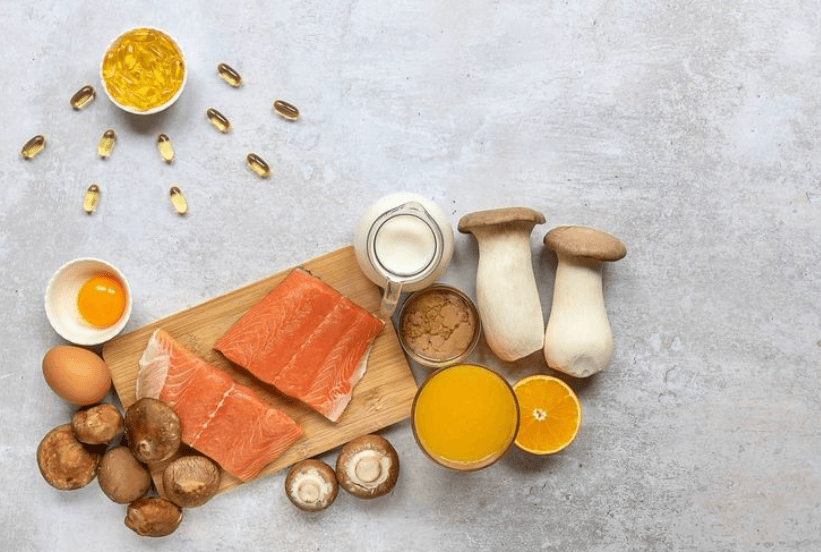
Forms: D2 (ergocalciferol) and D3 (cholecalciferol). Activation: skin → liver (25‑OH‑D) → kidney (1,25‑(OH)₂‑D). Sources: fatty fish, cod liver oil, egg yolks, fortified foods; <10% of intake comes from food. Roles: calcium absorption, bone mineralization, muscle and immune function. Needs: 600–800 IU/day (15–20 µg); optimal status: 25‑OH‑D ≥ 30 ng/mL. Deficiency causes rickets, osteomalacia and muscle weakness. In obesity vitamin D is sequestered in adipose tissue and circulating bioavailability is often reduced; some Mediterranean populations show frequent deficiency despite sun exposure (behavioural, skin phototype, diet, genetic polymorphisms).
Vitamin E (tocopherols)
- Sources: vegetable oils, nuts, seeds, green vegetables
- Role: major membrane antioxidant, protection against oxidative stress
- Indicative need: ~15 mg/day (α‑tocopherol)
- Deficiency is rare (linked to fat malabsorption)
- high doses may increase bleeding risk
Vitamin K
Forms: K1 (green vegetables) and K2 (fermented foods, gut flora). Role: blood coagulation and bone health (osteocalcin). Deficiency → bleeding disorders (neonates).
B complex: metabolism & nervous system
- The B complex includes vitamins essential for energy metabolism, DNA synthesis and nervous system function
- Examples: B1 (thiamine) – carbohydrate metabolism
- B2 (riboflavin) – electron transport
- B3 (niacin) – NAD/NADP
- B6 – amino acid metabolism
- B9 (folate) – DNA & pregnancy
- B12 – myelin and red blood cells
- Sources vary (whole grains, dairy, meat, legumes) and deficiencies have distinct clinical presentations
Vitamin C (ascorbic acid)
Sources: citrus fruits, kiwi, peppers, strawberries. Roles: collagen synthesis, antioxidant, non‑heme iron absorption, immune support. Needs: 75–90 mg/day; deficiency → scurvy; excess → digestive upset at high doses.
Interactions & bioavailability
- Dietary fats increase absorption of fat‑soluble vitamins (A, D, E, K)
- Vitamin C enhances non‑heme iron absorption
- Excess of a fat‑soluble vitamin may cause toxicity
Conclusion
Vitamins are essential to health maintenance; a diverse diet adapted to individual context and, when necessary, targeted supplementation under medical advice contribute to effective nutritional prevention. Vitamin D illustrates the complex interaction between nutrition, genetics, lifestyle and obesity.
Scientific references
- WHO – Micronutrient deficiencies
- ANSES – Dietary reference intakes
- EFSA – Dietary reference values for vitamins
- NIH – Office of Dietary Supplements
- Holick MF
- Vitamin D deficiency (NEJM)
- Wimalawansa SJ
- Vitamin D and obesity (Nutrients)